Crypto in 2026 bull run or late-cycle trap and which plan works better for long-term holders
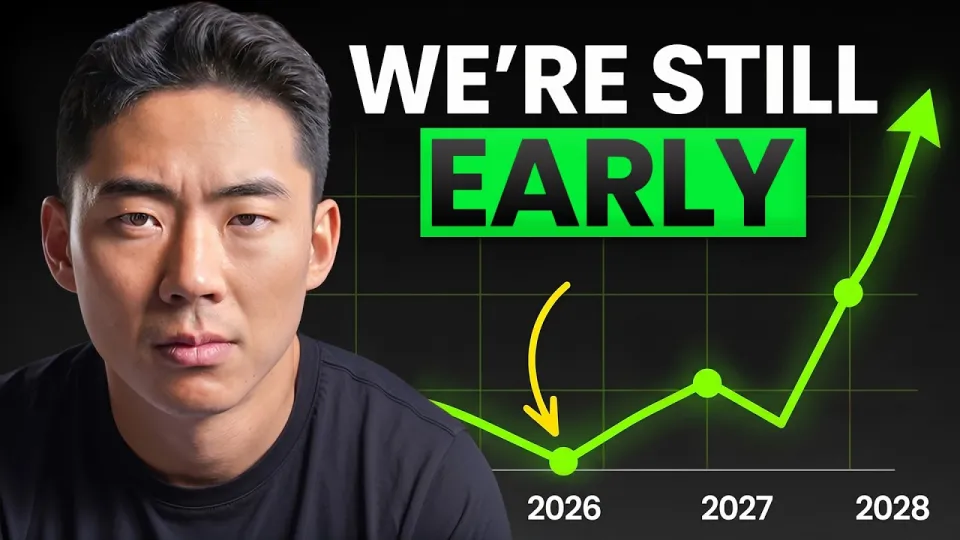
Video: my plan to make millions in crypto 2027
Want articles like this for your own video to promote it on YouTube and Google? Order them through the Telegram bot @sat_sit_bot. The bot writes and publishes the articles itself (with your YouTube video embedded) on popular topical websites (no ads). Try it free: 50 articles on us.
· based on the channel Brian Jung
Key takeaways
- Brian Jung's video "my plan to make millions in crypto 2027" splits into three blocks: why he is bullish, the narratives driving the next cycle, and his personal allocation plan.
- The core bullish case rests on three pillars: institutional inflows through spot ETFs, regulatory clarity after the CLARITY Act debate, and continued Bitcoin supply scarcity after the halving.
- Narratives named for the coming cycle include Ethereum and layer-2 scaling, Solana and Sui as high-throughput chains, plus DeFi, RWA tokenization and AI-crypto infrastructure.
- The plan itself is a framework, not a ticker list: position sizing, staged entries, taking profit into strength and keeping stablecoin dry powder for drawdowns.
- Audience comments show the real risk: traders who followed similar 2025 calls lost money, so any cycle thesis needs invalidation levels and a hedge.
Crypto in 2026 is best treated as a late-stage accumulation market rather than a guaranteed bull run, and the better plan is one built on position sizing and staged entries instead of all-in conviction. Brian Jung's video "my plan to make millions in crypto 2027" frames the same idea from the bullish side: institutional inflows, clearer regulation and supply scarcity support the upside, while execution discipline decides who actually keeps the gains. Anyone who wants the full framework, including the paid research tier, can join the Kaizen Pro waitlist here: Kaizen Pro waitlist.
What the crypto plan in this video actually covers
The video is structured in three parts: the bullish case for crypto, the narratives expected to drive the next cycle, and the personal plan for making millions this cycle. That structure matters because it separates macro conviction from trade execution, and most retail losses come from confusing the two. A trader can be right about Bitcoin's long-term direction and still get wiped out by leverage during a 30% drawdown.
Jung's channel has a long track record of cycle content, and this video continues that format: a thesis, a list of narratives, and a personal allocation. What it does not provide is a ticker-by-ticker buy list with entry prices, which is exactly why the plan is portable. The useful takeaway is the framework, not a copy of someone else's portfolio.
Why the bullish case rests on flows and regulation
The bullish argument in crypto today is mostly about who is buying. Spot Bitcoin ETFs turned a speculative retail asset into something pension funds and registered investment advisors can allocate to through standard brokerage accounts, and those flows are sticky in a way that exchange deposits never were. Every month of positive net inflows removes coins from liquid supply.
Regulation is the second pillar. The debate around the CLARITY Act, and the broader fight over whether crypto should be treated as securities or commodities, has moved from hostile to negotiable. One viewer made a sharp point: if CLARITY gets rejected, that may actually be better for crypto, because nobody serious wants banks controlling the asset class. The counterargument is that clarity, even imperfect clarity, unlocks institutional capital that currently sits on the sidelines.
Supply is the third pillar. Bitcoin's issuance schedule is fixed, and each halving cuts new supply in half. When demand rises through ETFs while new coins per block fall, the market clears at higher prices unless demand collapses. That is the mechanical part of the thesis; the uncertain part is demand.
The narratives driving the next crypto cycle
Narratives are where capital rotates after Bitcoin leads. The video groups them into several buckets that have real usage behind them:
- Ethereum and layer-2 scaling. Ethereum remains the settlement layer for most DeFi and tokenized assets, and L2s such as Arbitrum, Base and Optimism capture activity while fees stay low.
- High-throughput chains. Solana and Sui are repeatedly named as alternatives with fast finality and low costs; Sui in particular drew comments from viewers who had waited for coverage.
- Real-world asset tokenization. Tokenized treasuries and private credit are growing because they solve a real problem: settlement speed and access.
- AI and crypto infrastructure. Compute marketplaces, data networks and agent payment rails attract venture money even when token prices lag.
- DeFi and restaking. Yield-bearing stables and restaked ETH keep capital on-chain instead of in a bank account.
Each narrative has a different risk profile. Layer-2 tokens face fee compression and heavy unlocks; high-throughput chains depend on developer retention; RWA growth is real but slow and partly permissioned. Treating all five as equal bets is a common mistake.
How the allocation plan turns conviction into positions
The plan is a risk framework disguised as a bull case. Its components are straightforward and repeatable:
- Core allocation in Bitcoin and Ethereum, sized so a 50% drawdown does not force a sale.
- Satellite positions in two or three narratives, capped at a fixed percentage of the portfolio.
- Staged entries: buying in tranches on a schedule rather than one lump sum.
- Profit-taking rules written down in advance, because the hardest decision in a bull market is selling.
- Stablecoin dry powder held for drawdowns, which is what separates a plan from a hope.
One viewer said they would put 50% into altcoins. That is a legitimate choice only if the other 50% is genuinely defensive and the altcoin half is diversified across narratives rather than concentrated in one chain. Position sizing is the single variable most retail traders ignore, and it explains why two people with the same thesis end up with opposite results.
What the skeptical comments get right about crypto cycles
The most-liked comment under the video is blunt: the same thing was said in 2025 and the person lost everything. That experience is real and worth respecting. Bullish cycle content is abundant in every market, and the failure mode is always the same: leverage, concentration and no exit plan.
A second common doubt is whether the cycle top lands in 2029 or much earlier. Nobody knows, and anyone who states a date with confidence is guessing. What can be controlled is the response: define what invalidates the thesis, decide in advance how much to sell at each target, and keep a hedge for the scenario where the market breaks down instead of up.
The third doubt is about regulation. If banks end up controlling crypto rails, the asset class may become safer but less explosive. That trade-off is worth accepting consciously rather than discovering it after the fact.
Useful links
- Kaizen Pro waitlist: https://whop.com/kaizen/products/kaizen-pro/
- Free crypto market report newsletter: https://newsletter.kaizen.gg/subscribe
- Brian Jung on X: https://twitter.com/thebrianjung
- Brian Jung on Instagram: https://www.instagram.com/creditbrian
- Risks and disclaimers document: https://docs.google.com/document/d/1WIgz8SB1mMzke0uvLt_6zXmSbqLL4gL5VgpDnVEk5m8/edit?usp=sharing
The takeaway for anyone building a crypto plan
The better plan is the one that survives being wrong, not the one with the highest upside target. Jung's framework is useful because it pairs a bullish thesis with sizing, staged entries and profit-taking rules, and because it names narratives with actual usage rather than pure hype. The skeptical comments are equally useful: they show what happens when conviction replaces risk management. Brian Jung's breakdown is worth watching for the structure, but the numbers in it should be replaced with your own, and the plan should be written down before the next leg up or down begins. If you want the paid research version, the entry point is the Kaizen Pro waitlist.
Source: my plan to make millions in crypto 2027 · Markdown version
Questions & answers
Is crypto a good buy in 2026?
It depends on position size and time horizon. The bullish case rests on ETF inflows, regulatory progress and fixed Bitcoin supply, but the market is volatile and can drop 50% or more. A staged entry with a defined maximum allocation is more defensible than a single lump-sum purchase.
Which narratives does the video highlight for the next cycle?
The video groups them into Ethereum and layer-2 scaling, high-throughput chains such as Solana and Sui, real-world asset tokenization, AI and crypto infrastructure, and DeFi with restaking. Each carries different risks, from token unlocks to fee compression, so they should not be treated as equal bets.
Why do some viewers say they lost money following similar calls?
The usual causes are leverage, over-concentration in one altcoin and no exit plan. A thesis can be directionally correct and still produce losses if the position is sized so that a normal drawdown forces a sale. Written profit-taking and invalidation levels are what prevent that.
Does regulation help or hurt crypto prices?
Clearer rules tend to attract institutional capital, which supports prices, but they can also push activity toward banks and regulated intermediaries, reducing the speculative upside. Both outcomes are possible, which is why regulatory news should be treated as a variable rather than a guaranteed catalyst.